Donkey Kong Bananza Developers Break Silence on Controversial Redesign, Call It 'Necessary Evil'
In a new interview, the team behind Donkey Kong Bananza explained why the beloved ape’s makeover wasn’t a choice so much as a consequence of their vision for the game.

Summary
- Developers admit Donkey Kong’s redesign in Bananza wasn’t planned, but became inevitable for the new game’s direction.
- Design team drew from past portrayals, from villain in the original Donkey Kong to jungle king, to expand his expressions and personality.
- Early 3D models convinced designers that facial expressions and synced animations should define the gameplay experience.
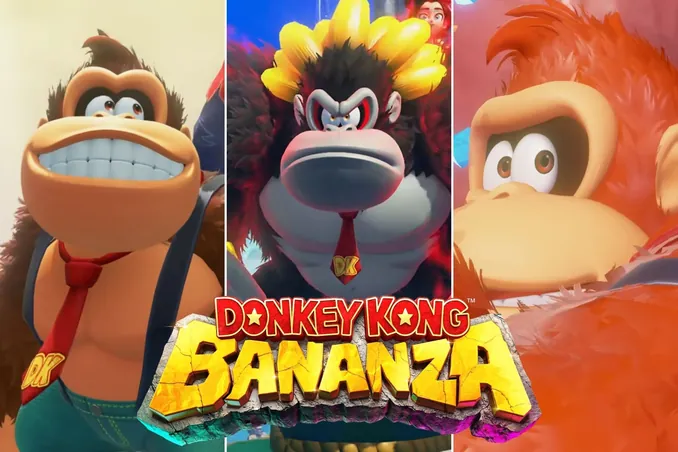
The creative team behind Donkey Kong Bananza has acknowledged that the game’s most debated feature, a striking update to the iconic ape’s appearance, was never part of their initial plan.
Instead, they said, the shift became unavoidable as development progressed.
Related
In a recent interview with the Japanese publication Famitsu, director Kenta Motokura, co-director Wataru Tanaka, and character designer Daisuke Watanabe described how disparate ideas of Donkey Kong’s identity eventually converged into a new design that both surprised and divided longtime fans.
Motokura said the team began by gathering impressions from staff who remembered Donkey Kong in different eras: the early Super Nintendo games, the Donkey Kong 64 years, and later appearances.
“As we developed the new DK, we decided to incorporate the images and characteristics we heard from staff members from various angles,” he explained.
Watanabe, who led the visual side of the redesign, pointed to Donkey Kong’s shifting roles across Nintendo history as a key factor.
“DK started as the villain in the original Donkey Kong, but he’s also been portrayed as a jungle king at times,” he said. “We saw this wide range of experiences as one of his defining traits. We thought expanding his range of expressions, including his personality, would make his DK-ness stand out more.”
The design process, Watanabe added, was informed by conversations with artists who had drawn the character in earlier titles.
Their advice, he recalled, helped refine choices about physique, proportions and facial detail.
“Making this part bigger makes it feel more like DK,” one artist told them.
Asked whether a visual overhaul was necessary to launch an entirely new Donkey Kong title, Motokura was blunt.
“Exactly,” he said. “Changing the design wasn’t the original goal; it was an inevitable part of creating a new game.”
The decision, Watanabe explained, was solidified once the team built an early 3D model and watched the character in motion.
“Seeing him move on screen made him appear very large, giving us the impression, ‘This is a character where facial expressions will really stand out,’” he said. “Since this could become a defining feature of the game, we decided to put particular effort into creating a wide range of expressions this time.”
The team’s goal was not simply cosmetic. With Bananza expected to feature a broad spectrum of actions, Watanabe said they sought to ensure that animation and design were closely aligned.
“We aimed to design it so that the actions and expressions would sync up,” he said. “That way, the gameplay itself would be fun and satisfying just to control.”
A Company That Redesigns by Habit
For Nintendo, redesigns are nothing new. In fact, the company has built much of its legacy on them.
Mario, the company’s most famous creation, has undergone steady transformation since his debut in Donkey Kong more than 40 years ago.
His early pixelated form gave way to the rounded, cartoon-like plumber of the 1990s, and later to the globe-hopping adventurer of Super Mario Odyssey. Each change brought complaints, and each change eventually became the new normal.
Link, the protagonist of The Legend of Zelda, has perhaps been the subject of Nintendo’s most divisive makeover.
When The Wind Waker debuted in 2002 with cel-shaded, wide-eyed cartoon visuals, the backlash was fierce. A generation later, fans celebrate that iteration as one of the series’ artistic triumphs.
Link would later pivot again toward realism in Twilight Princess, before finding a middle ground in Breath of the Wild.
Samus Aran, the spacefaring hero of Metroid, shifted dramatically as well, with each new console generation bringing new armor, new suits and, controversially, more glimpses of the character beneath.
Even Princess Peach, a figure often seen as static, has been redrawn and reimagined, reflecting changing tastes in animation and marketing.
Donkey Kong’s Shifting Roles
Donkey Kong himself has always been especially mutable. Introduced in 1981 as the foil to Mario, then called “Jumpman”, he began his career as an arcade villain.
By the mid-1990s, Rare, the British developer behind Donkey Kong Country, reimagined him as a lovable but powerful hero, complete with a red tie and a signature smirk.
That version carried Nintendo through the 16-bit and 64-bit eras, eventually spawning a franchise of its own.
In Bananza, Nintendo seems eager to merge this complicated history into a single, cohesive identity.
The developers cite his past incarnations, both villain and hero, as reference points.
The redesign, they argue, is not about abandoning the old but about encompassing the full range of what Donkey Kong has been.
Got a tip for us? Email: [email protected]. Did you find an error in this article? Email: [email protected].
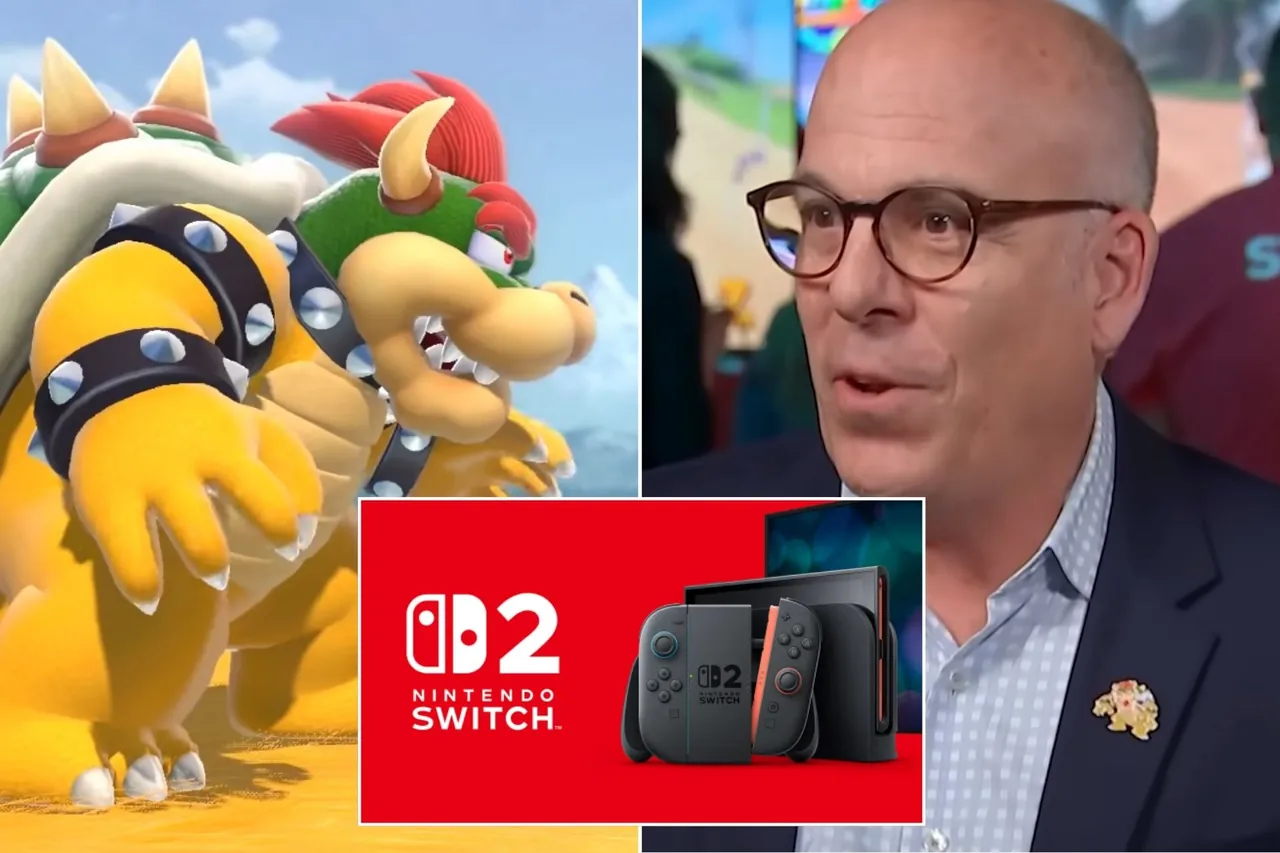
Devon Pritchard now steps into the role as Nintendo reshuffles its U.S. leadership.