IGN Gives Ghost of Yotei Lower Score Than Dragon Age Veilguard, Critics Call It 'Better Than Tsushima' But Fans See 'Disaster Coming'
The latest PlayStation epic is riding a wave of critic hype, but fans aren’t buying it, calling out déjà vu from BioWare’s failure.

Summary
- Critics hail Ghost of Yōtei as a major success, but fans compare it unfavorably to Dragon Age: The Veilguard amid déjà vu concerns.
- Early access reviews spark debate over ‘shill media’ and whether publishers influence game scores through selective code distribution.
- Players praise the visuals and combat, but skepticism grows over protagonist changes, studio controversies, and long-term sales prospects.
The reviews for Ghost of Yōtei, the much-anticipated follow-up to Ghost of Tsushima, landed this week with a chorus of near-universal acclaim.
Major outlets lined up with glowing scores: Video Games Chronicle called it one of the best games of the generation, Digital Trends and Gamerant both awarded perfect 10s, while GameSpot and Push Square settled at nines.
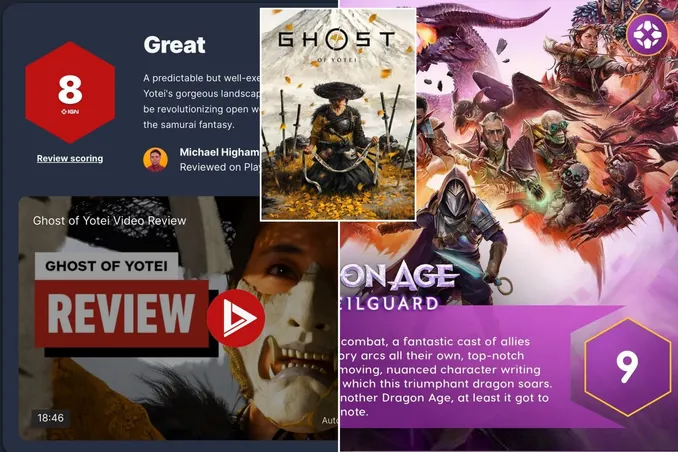
Even the ever-cautious IGN handed it an eight, enough to nudge the game toward a Metacritic score of 87 based on more than 100 critic reviews.
On paper, this should signal an unqualified success. Yet among players and commentators, the launch has sparked unease that feels eerily familiar.
The enthusiasm of professional reviewers is being weighed against accusations of bias, questions about studio politics, and comparisons to a cautionary tale: Dragon Age: The Veilguard.
Ghost of Yōtei Launches to Critical Praise, but Fans See Shadows of Dragon Age’s Veilguard Debacle
Praise, With a Catch
The press narrative around Ghost of Yōtei is glowing. Reviewers described it as a “refinement of the samurai power fantasy” established by its 2020 predecessor, praising its cinematic influences, expanded combat system, and female protagonist, Etsu.
Rolling Stone called it an “Emotionally Gripping and Meditative Samurai Revenge Saga,” positioning her as a striking contrast to Tsushima’s more reserved Jin Sakai.
Some players, however, are reading between the lines. Social media users noted that IGN’s eight-out-of-ten score places Yōtei below The Veilguard, a game that was loudly celebrated by critics upon release, only to collapse under the weight of poor sales, controversy, and player dissatisfaction.
One viral post on X framed it bluntly: “According to IGN, Ghost of Yōtei is worse than Dragon Age: The Veilguard.”
The comparison was not intended as a compliment.
Déjà Vu from BioWare’s Collapse
The shadow of The Veilguard looms large here. When BioWare’s latest Dragon Age title launched in 2024, critics praised its writing, combat, and inclusivity, with IGN describing it as “moving, nuanced, and triumphant.” Players, however, revolted.
Complaints ranged from narrative shallowness to what detractors saw as excessive emphasis on identity politics.
Sales never recovered. Within months, The Veilguard’s trade-in value had plummeted, BioWare had weathered mass layoffs, and even Electronic Arts’ CEO was forced to explain away the game’s commercial collapse.
The gap between critical praise and consumer rejection became a textbook case of disconnect between gaming media and its audience.
That history is fueling suspicion around Ghost of Yōtei.
Fans worry that an overabundance of glowing reviews, many from outlets that received early access codes, signals another cycle of hype and disappointment.
Questions of Access and “Shill Media”
The skepticism isn’t just about déjà vu, but also about the machinery behind modern game reviewing.
Several independent commentators pointed out that the outlets receiving advance copies from Sony or Sucker Punch overwhelmingly delivered positive verdicts.
Smaller YouTubers, many previously unknown, also received codes, and many seemed eager to highlight their early access as a kind of social capital.
“This is the whole point,” one critic argued.
“Don’t fall for these reviews. Companies give early access, and in exchange the expectation is that you’ll glaze over flaws. If you don’t, you may not get codes next time”.
The critique evokes memories of the Gamergate scandal a decade ago, when relationships between publishers and media outlets came under fire.
So did glowing reviews reflect genuine enthusiasm, or a careful balancing act to maintain access?
A Divisive Protagonist
The change in protagonist has also been a flashpoint. Where Tsushima centered on Jin Sakai, Yōtei introduces Etsu, described as a short-tempered warrior bent on vengeance.
For some reviewers, this shift brought freshness and energy. For others, it symbolized a political turn.
On forums and social platforms, detractors described Etsu as an “Antifa lesbian” or dismissed her characterization as “angry woman syndrome”, rhetoric that critics argue reveals more about the players than the game itself.
Still, the reaction underscores a broader tension in the industry, when representation intersects with beloved franchises, it often becomes a lightning rod for controversy, regardless of narrative execution.
Critical Acclaim vs. Consumer Trust
For players who adored Ghost of Tsushima, the stakes feel personal. The original game was hailed as a landmark for PlayStation Studios, selling more than eight million copies and earning a passionate fan base.
One longtime fan, after praising Tsushima as a top-ten game of all time, called Yōtei’s direction “tragic.”
They predicted it would break even financially but fail to reach even one-third of Tsushima’s lifetime sales.
Such skepticism points to a growing divide in how players interpret critical consensus.
Where traditional outlets see refinements, some consumers see marketing choreography. Where reviewers see innovation, others see forced narrative shifts.
The Numbers Game
Ultimately the fate of Ghost of Yōtei may not be decided by review scores, but by sales figures.
Analysts expect the game to avoid outright disaster, no one is predicting a Concord-style implosion, but opinions differ on whether it will sustain the same momentum as Tsushima.
Industry watchers are already monitoring concurrent player counts and long-term adoption curves, wary of repeating the Veilguard scenario where a glowing launch gave way to commercial disappointment.
Behind the Curtain at Sucker Punch
Complicating matters further are questions about Sucker Punch Studios itself.
Players have raised concerns about internal controversies, including the hiring of developers with outspoken political views and alleged firings tied to online conduct.
While these issues remain murky, their presence in online debates shows how modern players increasingly weigh studio culture alongside gameplay quality.
As one critic put it:
“I’ve learned to separate the art from the artist, but I refuse to financially support a company that employs people who actively dislike me. My wallet stays closed”.
Got a tip for us? Email: [email protected]. Did you find an error in this article? Email: [email protected].
PS5 disc buyers may still need a large internet install despite owning physical media.